Bisa Butler On Her Approach to ‘Painting with Fabric’
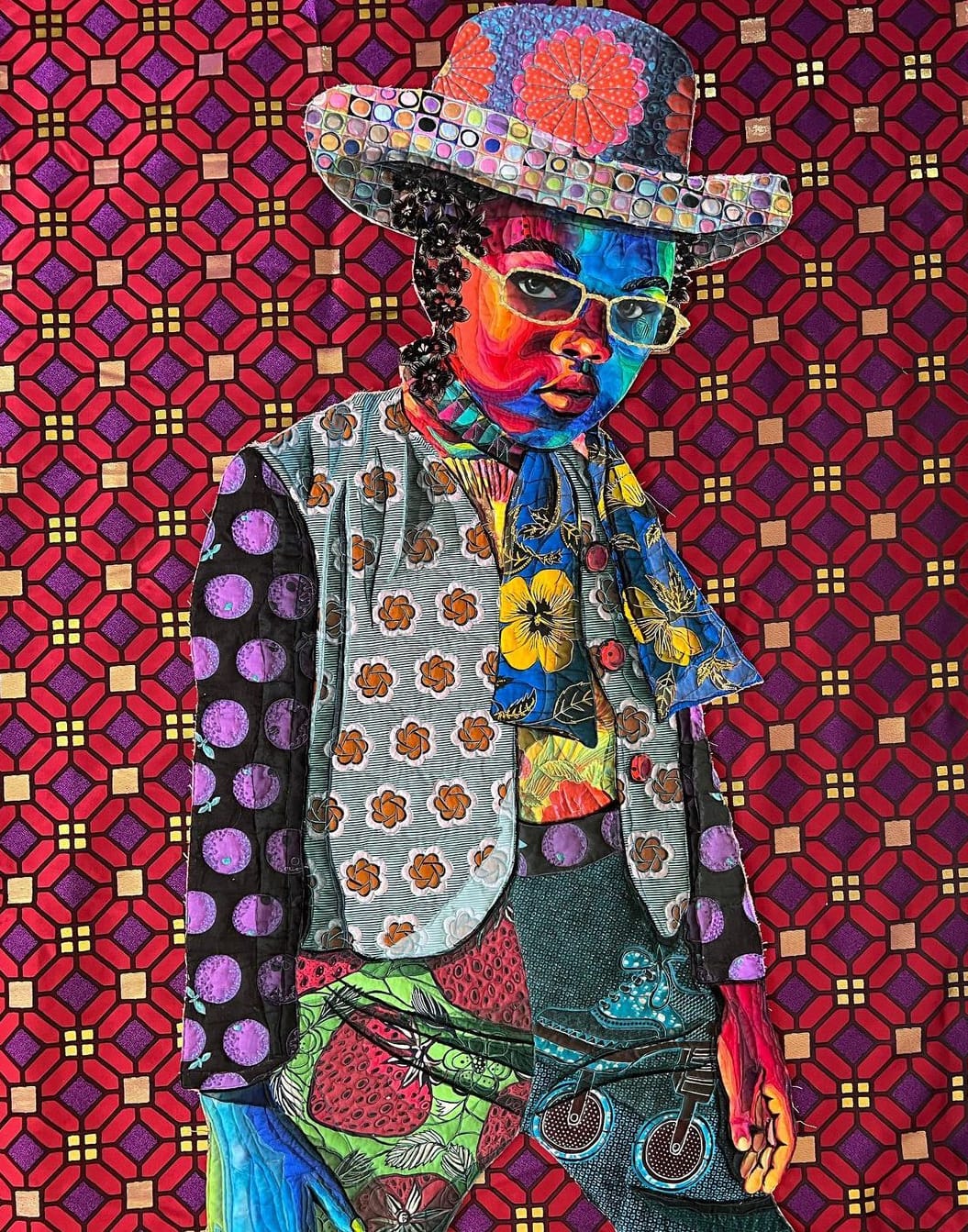
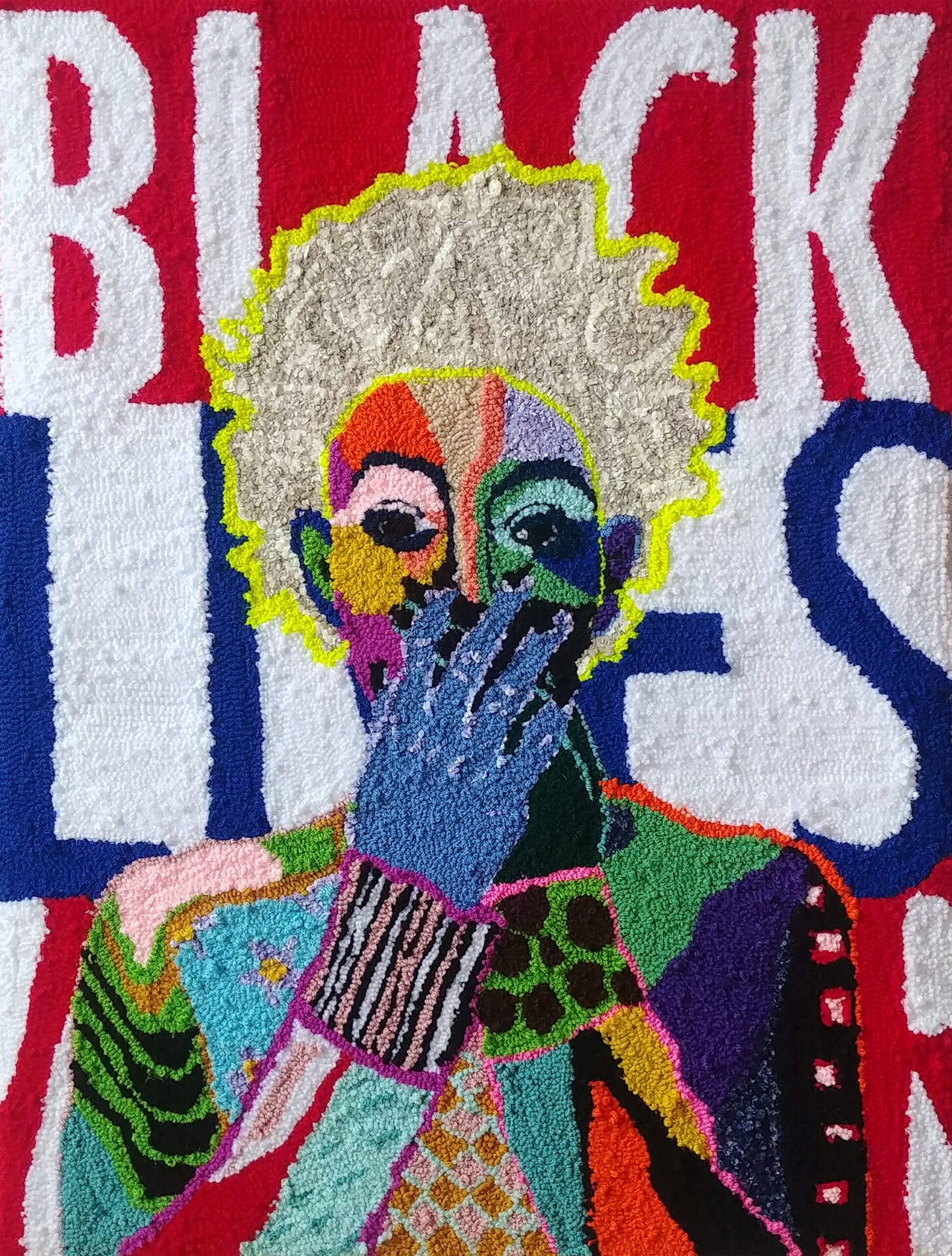
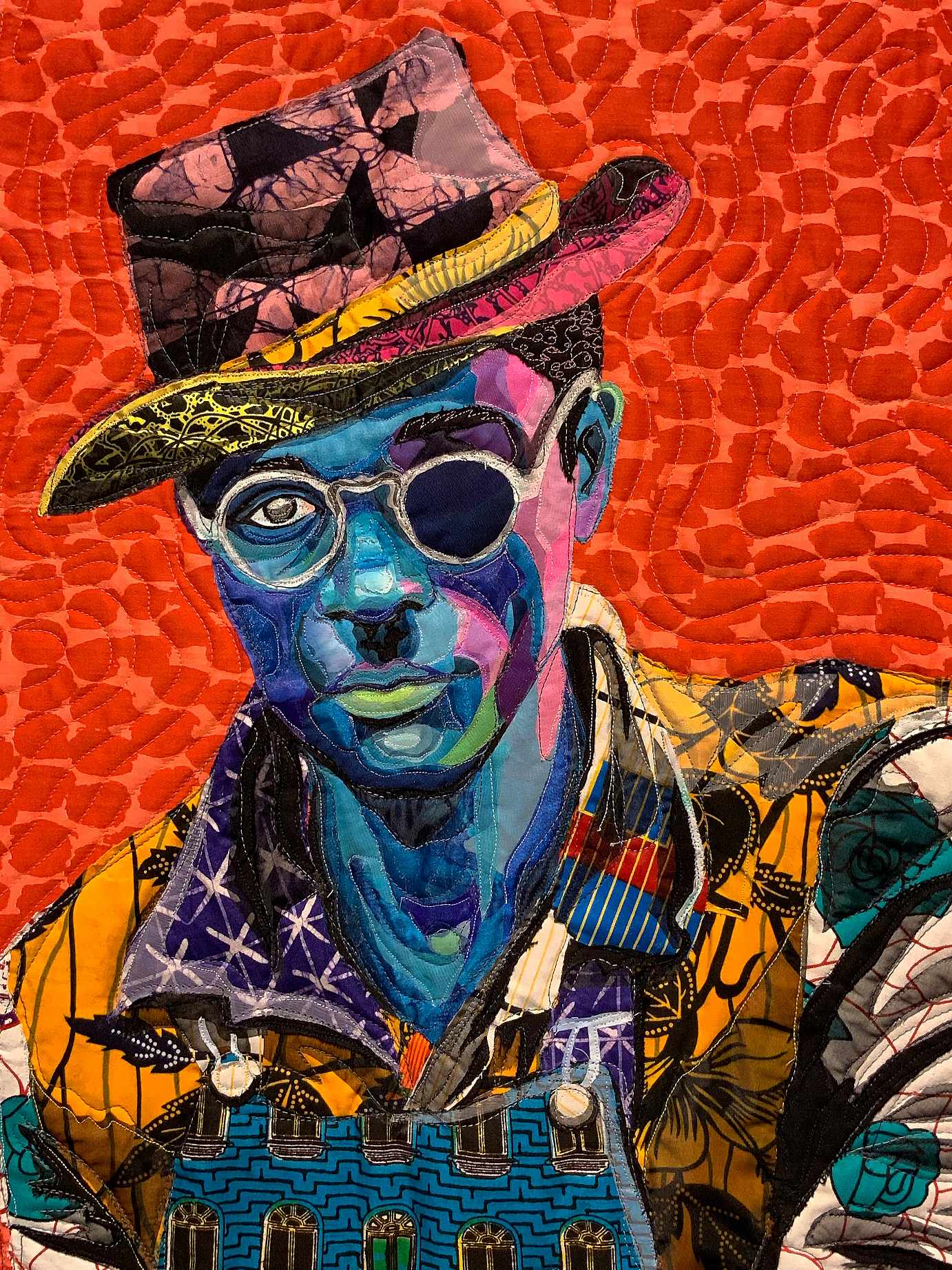
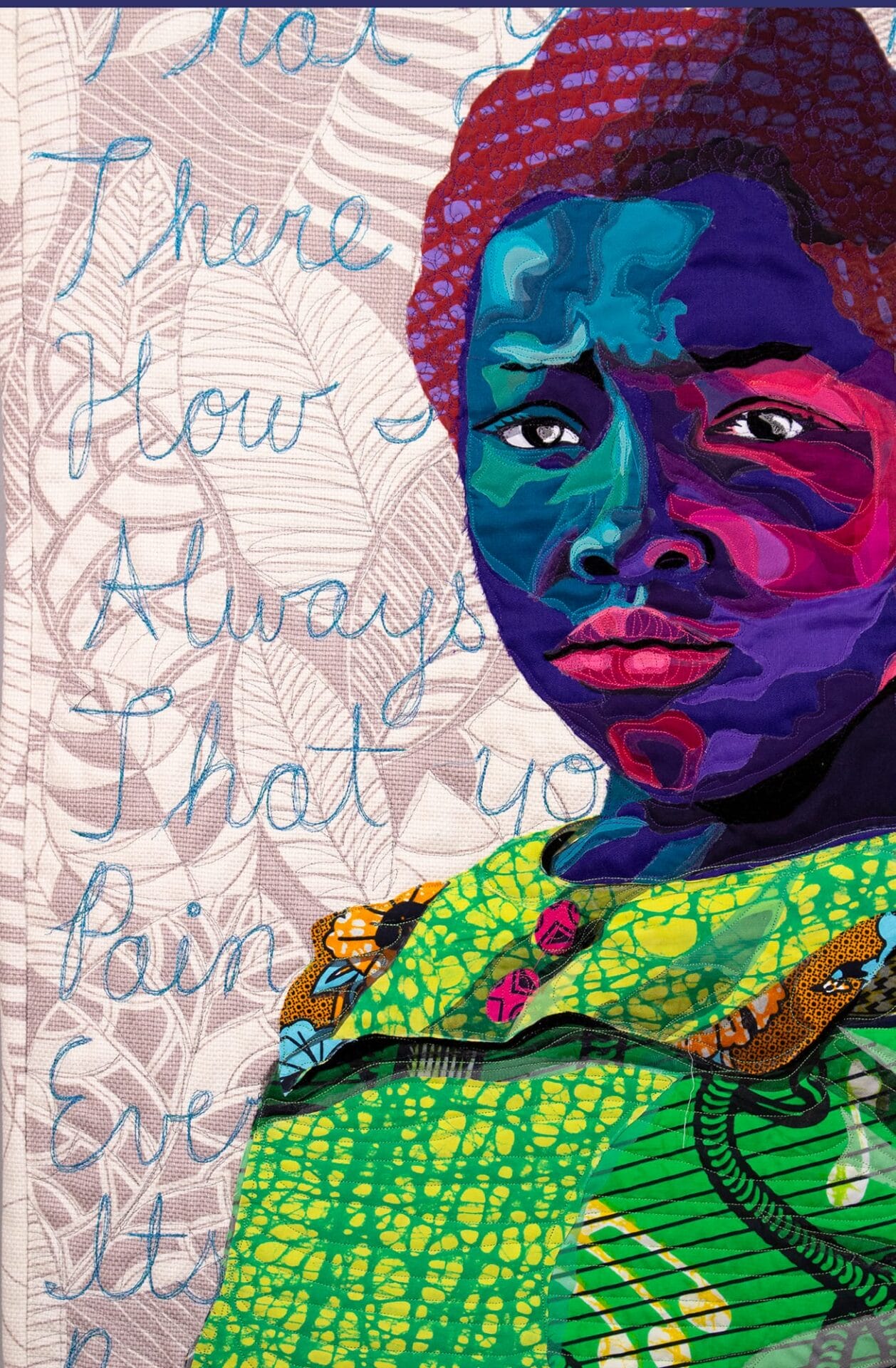
Bisa Butler (previously) shares her fascinating journey with fiber art, African textile traditions, and historical portraiture in an interview with Laura Staugaitis. Drawing from university training with both AfriCOBRA artists and feminist fiber artists, Butler has carved her own path as an exhibiting artist with vibrant and evocative quilts.
Laura: What have you been working on lately? What are you thinking about these days?
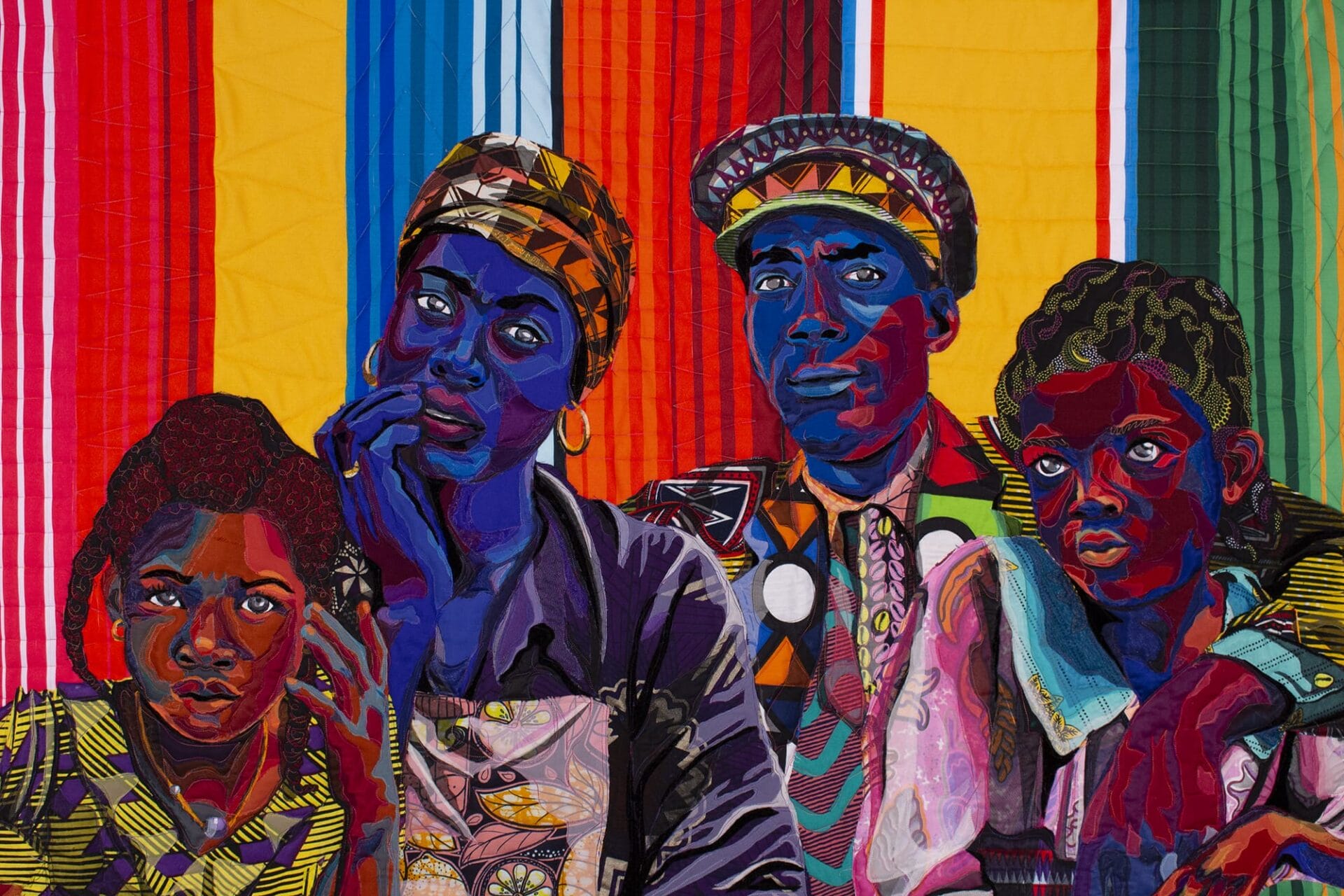
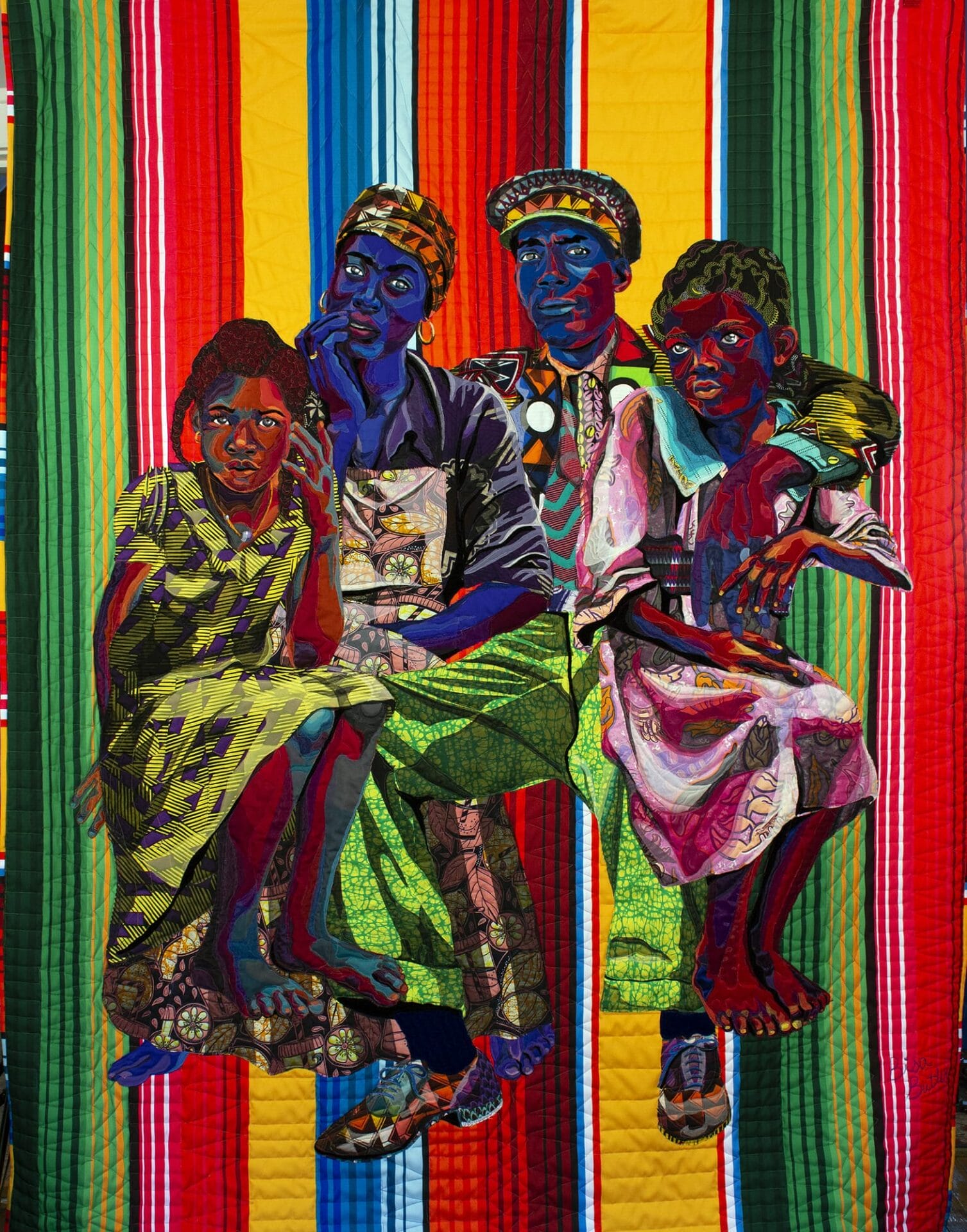
Bisa: I’m working on a small group of eight pieces that are going to be debuted in Harlem in March, when I have my first solo show at Claire Oliver Gallery. So I’m crunching right now. I’ve finished putting them together and then the sewing I do after. Putting them together takes about 200 hours. It’s just really slow and painstaking. The sewing I can do in two days, about sixteen hours total. That part is so rewarding and so much faster.
Laura: Do you tack things down? How do you get everything to stay in place?
Bisa: I use fabric glue. If you slather it on, it has its own texture: shiny, flaky, lumpy. It can change the fabric, but I want my fabric to be soft. I put the glue on using a straight pin, just tiny dots of glue. That’s why it takes so long. It’s cutting things smaller than your finger nail and then putting them on with a straight pin and glue. I could have been a surgeon, or I could have been an artist!
Laura: Is your whole family creative?
Bisa: My immediate family—father, mother, brothers and sisters—none of them were creative by profession, but my mother sewed. She taught me to sew. She grew up in Morocco, which is very Francophone, so she grew up in the ‘60s looking at Vogue and Elle, and she and her sisters would look at Yves Saint Laurent gowns and make their own for their parties.
My husband’s family is not creative either, but he’s a DJ, and I’m an artist, so our kids are creative. We grew into being more practical, but her dad and I got married senior year of college—“we’re so in love! It’s going to be so easy!” We were just not the most practical of folks. But you’ve gotta have the dreamers and the realists.
Laura: Was your mom’s upbringing in Morocco something that translated into your experience at all, or was it just a normal part of your family story?
Bisa: She grew up in the ‘50s and ‘60s with her nine siblings. My grandfather was a U.S. Emissary. My dad is from Ghana. He is a Ghanaian immigrant. So both of my parents grew up outside the United States, although my father is 100% Ghanaian, whereas my mother was a U.S. citizen living in Morocco. Definitely that changed their diet. When we would go to my grandmother’s house for dinner, we would have chicken and olives and tagines. And mint tea. Food was definitely a way that cultural identity gets changed. We grew up with couscous instead of rice. That’s what we thought was normal.
Our parents and relatives were always going back and forth. My one uncle went to work for the Peace Corps. Six of my mother’s sisters married African men. Everyone was always bringing things back. In Africa, you get all your clothes tailored. When you go on a trip, when you come back you have a suitcase full of tailored clothing, and then your linens—tablecloths, napkins, all custom made. If there’s a big event, like a wedding, everyone gets an outfit made with the same fabric. That was something I was just used to seeing.
My female relatives always wore African caftans around the house. All of their stories were about memories, places and people in Africa that they knew decades ago. All their friends, their references, their school, everything. So I had this image of what it was like to live there, through their stories—a lot more than my dad. He doesn’t talk that much, so you have to pull it out of him. My dad lives about three minutes from here—or I should say, I live about three minutes from him. We bought a house close by. So he was just over last night, looking at my new pieces and giving his two cents.
Laura: Were your parents supportive of you pursuing a creative career?
Bisa: They were supportive. My whole life, they would say, “This is my daughter. She’s an artist!” and I’d be, like, three. My mom and dad always encouraged that. My Christmas list always consisted of some sort of art supplies. Going into college, my dad wanted me to be able to survive, so he convinced me to go to school for architecture. It’s art-related but also affords a steady job. I got excited about it, but I had no idea what it even consisted of, what classes would be like. I was on a full-ride academic scholarship for architecture.
And I got there and just hated it. Everyone was engineers, mathematicians. They were not my kind of people. Even the building was made of this white marble, and it felt so austere and cold. Everything was so quiet in there. It was hushed. The rules! It was horrible. So I switched over to art.
Laura: It’s much more of a technical than a creative pursuit.
Bisa: Yes, especially in the foundation classes. So after one year, I came home and told my dad that I was miserable. I was in tears, saying I wanted to switch to art. He agreed and let me switch. But I lost my scholarship. In those days, I think my tuition was $12,000 a year at Howard, and now it’s $48,000. It was a lot of money for him, still, but it’s a different conversation now.
Laura: And you got into the use of fabric when you had your daughter. Have you ever looked back from that decision, or was it more of a homecoming, of “this is exactly what I want to do”?
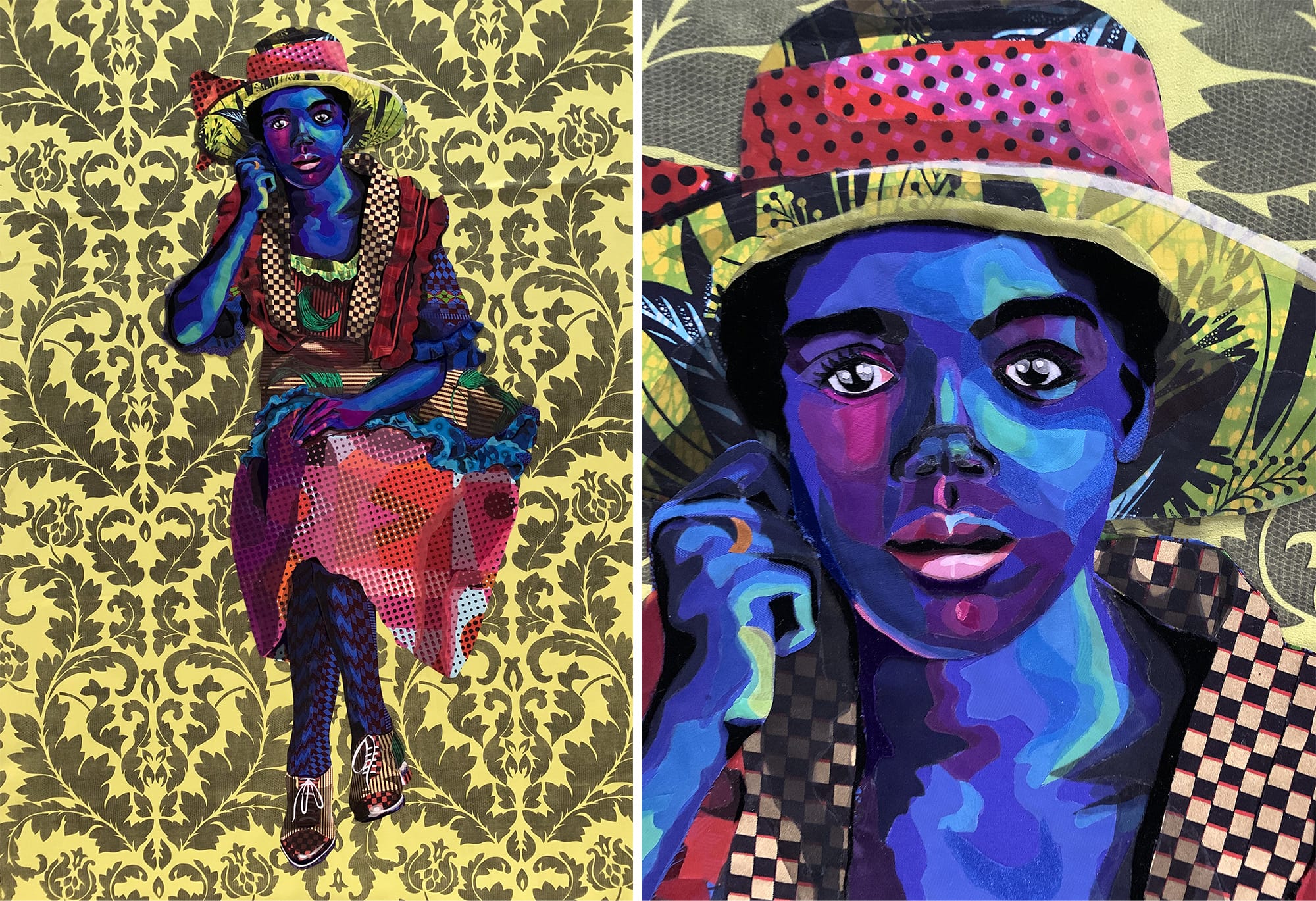
Bisa: Definitely. This is what it should have been. I had started using fabric in my undergrad. My senior year, one of my professors advised me to look at Romare Bearden. He had this series called Mecklenburg, which is this county in North Carolina. Bearden had this long career and did all kinds of things, but in that particular series, he was using fabric and watercolor and newspaper.
My professor suggested using fabric pieces in my paintings. So I used gel medium to add in fabric onto my canvas. It was the beginning, but it didn’t click to me about being fully immersed into cloth. They had strict rules then, that if you’re a painting major, then your artwork should be more than 50% paint. Mine was literally 50/50. Half the faculty, in my final review, said, “She’s not painting. How can we award her the degree when she’s not actually painting?” The other half were kind of on my side, saying, “She is painting; she’s painting with fabric.”
I didn’t quite get it until I went to grad school at Montclair State. Montclair State is a regular PWI (primarily white institution). It’s a state school with a really strong fiber arts program formed by female professors in the ‘70s. That was my first exposure to the feminist art ideals. At Howard, most of my professors were members of AfriCOBRA. Their aesthetic was Afrocentric, African-inspired artwork. At Montclair, the fibers program was really women-centered, “women’s work.” That was really different for me. I hadn’t been in these studios with rooms full of yarn. It was there that I got the idea.
To finish your Master’s, everyone had to take one studio class in fibers, and in that class you had to felt, knit, weave, make a quilt, screen-print on fabric, and do some batik and hand dying. In that class, I made a small quilt, and that was when it really clicked, and I haven’t looked back because it felt like “this is right.” Canvas was totally obsolete for me. Paintbrushes, paint: I couldn’t even use those things when I had my daughter. I was nauseous when I was pregnant, and when she was a little tiny girl it was too dangerous. I couldn’t have all those things around her.
Laura: It’s been interesting seeing how craft has entered the fine art lexicon in the last few years. Is that something you’ve been noticing or thinking about?
Bisa: I’ve definitely noticed that going to the fairs. When you’re walking around, I would always try to count how many fiber pieces I saw. Even in 2016 at the Armory Show, I might have seen maybe four or five fibers pieces throughout the whole show. And not all of them were really all that well done. It was just that they were there. And then this year at EXPO Chicago, I didn’t even need to count any more. I couldn’t count it on two hands. It’s really incredible. I have been exhibiting for a long time, since 2002, at local shows and craft fairs. Sometimes people would come up to me and say “so when are you going to start making art again?” At my exhibit! And I would be shocked, but they didn’t consider what I was doing art.
Laura: It didn’t even occur to them that that was a rude question.
Bisa: I remember one time I was exhibiting my student’s work and this guy came up and he was looking at the work, and he said, “So, if you’re the art teacher, do you also make art?” And I said, “Yes, I make fiber art.” And he goes, “Oh, your students are drawing and painting like this? It must be interesting having students doing things you can’t.” And I was stunned! Who do you think taught them? He just assumed that because I worked in fibers that meant that I couldn’t draw or paint.
Laura: It’s the same as Picasso—he was an amazing draftsperson. But you’re making an aesthetic choice. It’s not that you just can’t do the work.
Bisa: I love that Basquiat quote, “believe it or not, I can actually draw.” Because people look at your work and think you can’t. Now that the craft movement is being accepted as fine art has made life a lot easier for me. I have a museum show coming up in March at the Katonah Museum. I have a gallery show as well. With the museum show, my work is going to be in a contemporary wing. That’s different—I didn’t realize it was different—but the curators were telling me that before, that wouldn’t have been done.
Laura: What are the pieces that you’re working on for these shows. Is there a theme or body of work that you’re focusing on?
When I find these photos of free people or people in school or in Europe, I’m curious to know how they got there and what their life was like. It upends the story we’ve all been told of what life was like for Black people at that time.
Bisa Butler
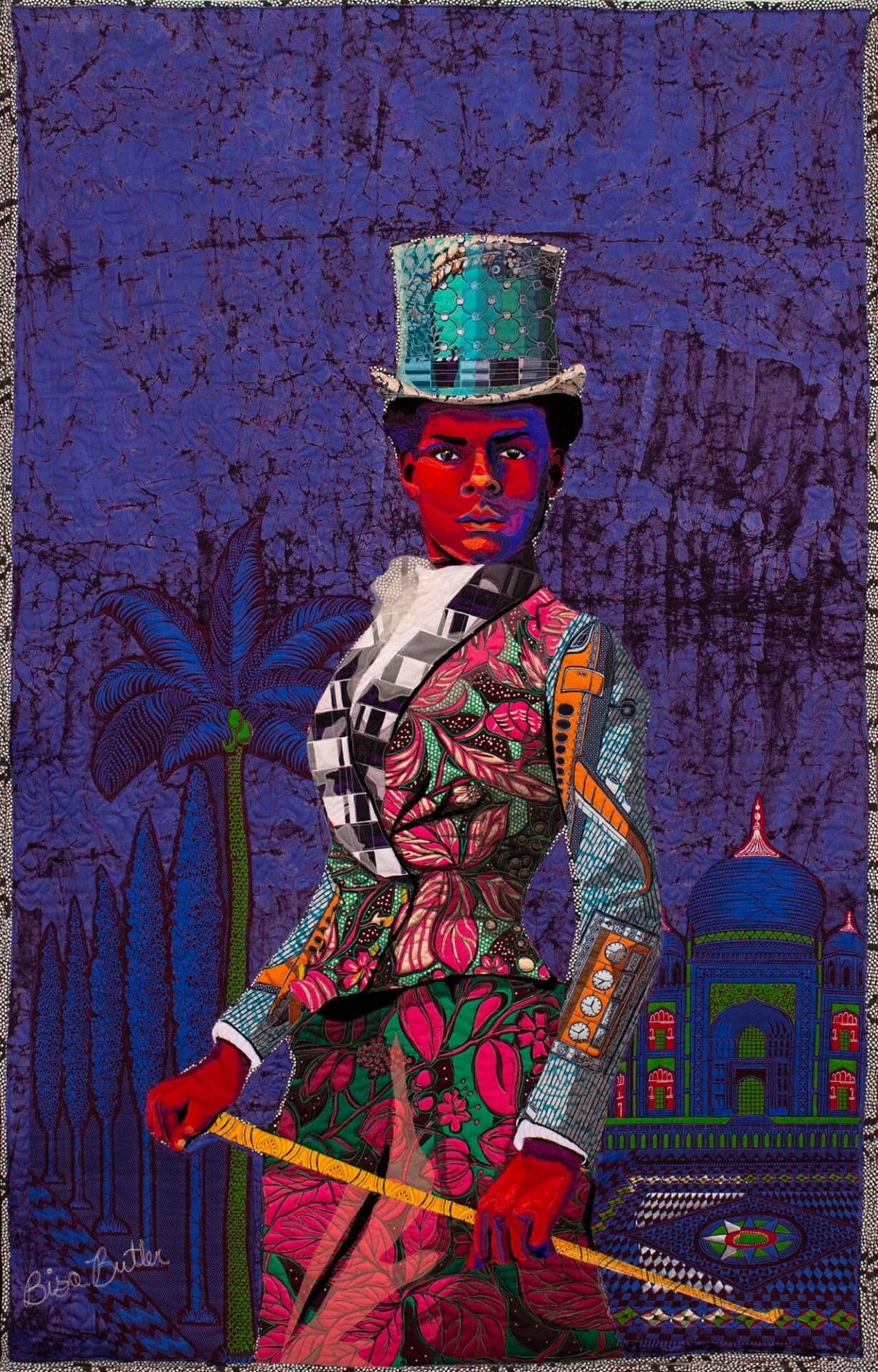
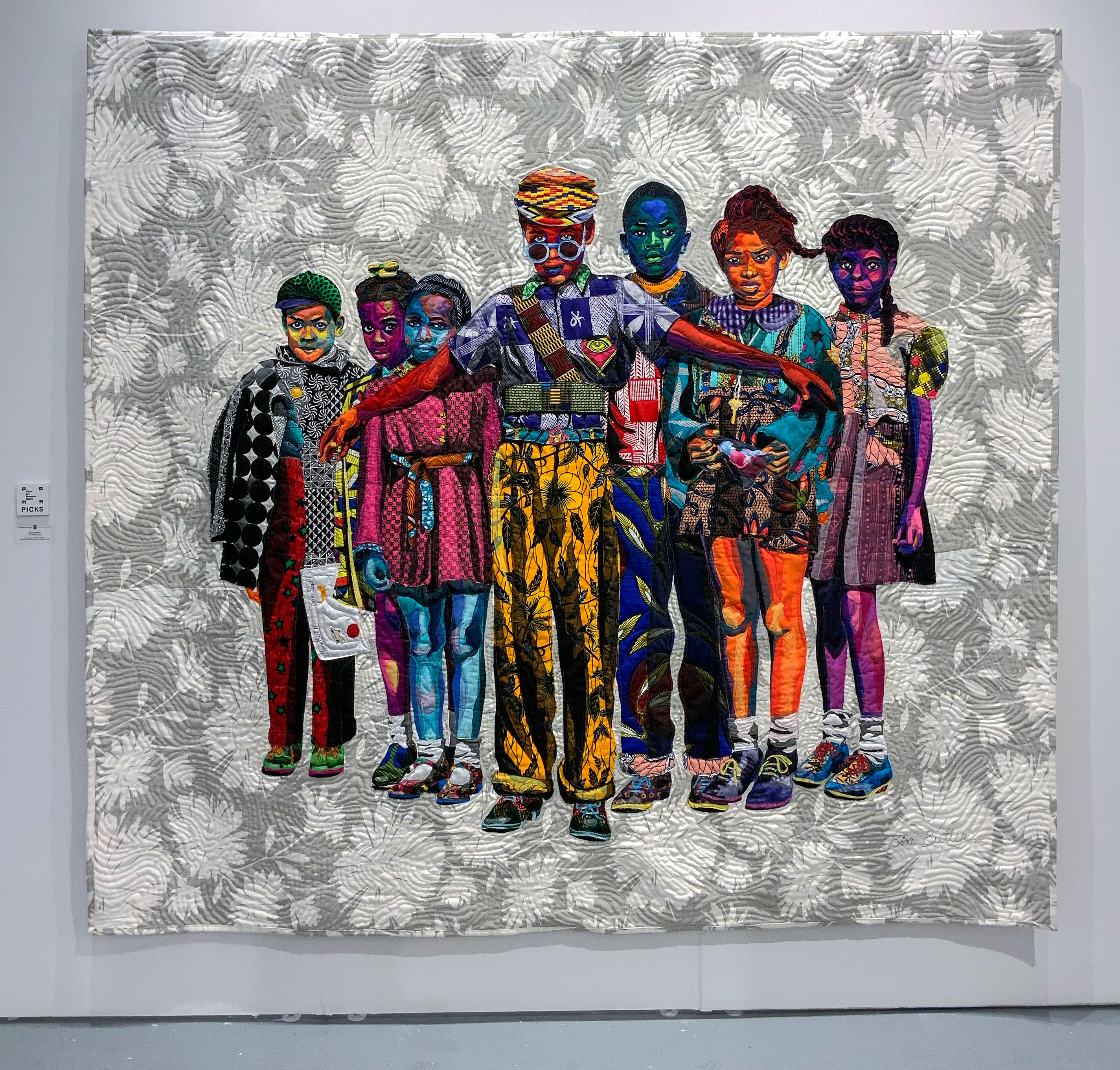
Bisa: Not so much a particular theme. I’m letting it emerge based on the photos I’m working with. I’m very heavily reliant on vintage photographs. Sometimes I get in eras. This particular era is 1860 and World War One. My last series, all my pieces were based in World War II, except for one. My biggest piece from the last series was baseball players from 1899. That really spurred curiosity in me about what life was like for African-Americans pre-Civil War. Not just as enslaved people. When I find these photos of free people or people in school or in Europe, I’m curious to know how they got there and what their life was like. It upends the story we’ve all been told of what life was like for Black people at that time.
Laura: The single narrative.
Bisa: Yeah, I’m looking at one right now. It’s titled “Free Men of Color” and was taken in 1850 in Louisiana. This guy has on a brocade vest and a wool jacket. They both have on fancy cravats. Before they went to Morocco, my mom’s family was from New Orleans, so there were a lot of free African-Americans and free mixed people of color. But there’s not that many photos, so it’s interesting to see it, to see how contemporary they look and the expressions on their faces. These are people who are comfortable in their skin and in their life in a time when 90% of black people were not.
Laura: When you’re working from the photograph, are you trying to translate the specific essence of that person in the picture? Or is it more a kind of general history reference that you’re interpreting.
Bisa: I am trying to get them. I’m trying to understand the individual person. By studying their photos when I’m working on them—200 hours, 300 hours—I’m really examining them in a forensic way. You start to notice things about them that no one may have noticed in a long time. Like if they have a pinkie finger that appears to be stiff, I think about maybe this person’s pinkie was paralyzed and didn’t bend like the rest of their fingers, that something happened there.
The clothes themselves give me a lot of clues, too. Someone wearing a really fancy cravat, like these guys are—you start to realize their personality. This guy really took time to look really dandified for this photo, with a tie pin and cuff links. You see the attention to their appearance. It really speaks to who this person is and how they care about themselves. I start looking at myself in this era. Our clothes are a lot less complicated. Some of them, I look at them and think, “Damn, what they’re wearing is probably better than anything I have in my closet.” I try to make sure I’m looking at them as equals, and as I’m studying them, I’m thinking, “I’m not sure if we’re on the same plane or not!” I find myself looking at them and feeling a little shabby!
Laura: What draws you to the different photos you use? How do you go about sourcing them and how you choose, of the things that you find, the image you want to spend 200 hours with?
Bisa: Initially, I used family photos. I was in school or fresh out of school and I wanted to show my appreciation. I made a portrait of my grandmother and then my dad—they were gifts. And then looking at their old photos, which were always black and white. That interest is still with me. I like the mystery of it, trying to figure out, “Who was this person? Were they funny? Were they stern? Was this the class clown?” Trying to figure out those kinds of quirks. Especially if everyone who knew this person was gone and they’re not famous, that’s not necessarily included in any written document, and sometimes not even a name.
I mostly use public databases like the National Archives and Library of Congress because I need photographs that are for public consumption. I look for things that have something special that’s drawing me in to the person in the photo. Not deliberately, but because I grew up looking at my grandmother’s photos of her childhood in New Orleans, and her grandmother and her great-grandmother and her cousins, I’m looking for things that spark something in me.
Some of it might be because they look like images that I’ve seen but I don’t remember. Like the baseball players, when I first saw them, I thought I was looking at a photo from the Negro League. We all know about Jackie Robinson and when he came to the Dodgers, but I thought this was a photo of him from before baseball was desegregated. Then I saw the caption read Morris Brown College Baseball Team, 1899. I was shocked—the Negro Leagues weren’t even formed at that time and these guys were playing baseball in college. This was 37 years after slavery, so it would be a big deal for them to be in college at all. They were going to segregated college in the South—Morris Brown is in Atlanta— during that time, they had lynching and race riots, and these guys are playing baseball—our pastime, but they can’t even vote.
When I saw the date I knew I had to do the piece. It was a personal challenge, too, because it has ten people, and I hadn’t done a piece that large.
Laura: How much does a piece change from when you start it to when you are done? Do you have a sense in your mind of what it will be like?
Bisa: I actually don’t have a preconceived notion of what it’s going to look like. I don’t visualize that. I sometimes have particular fabrics that I want to use.
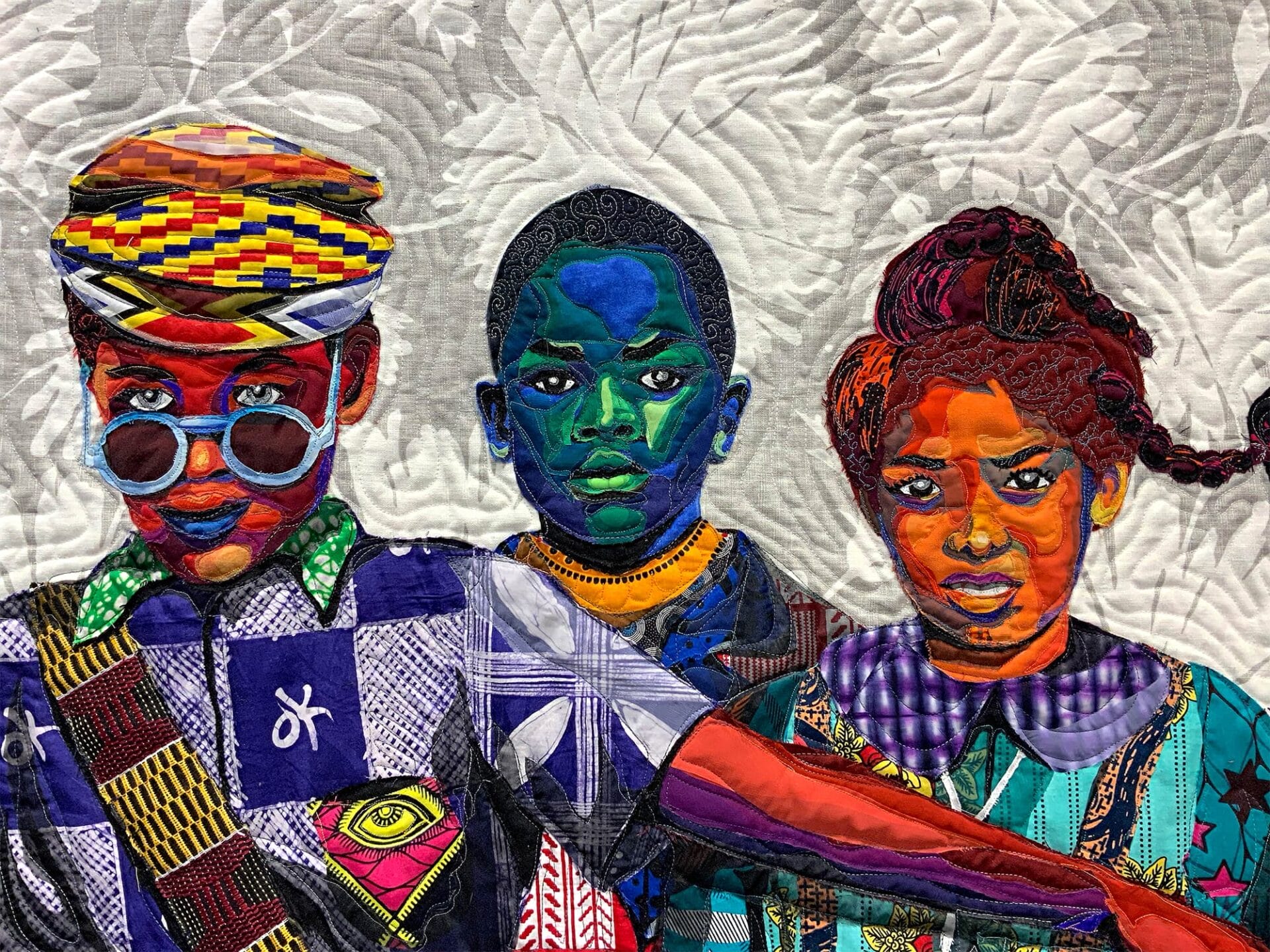
I just finished a soldier from World War One who fought for the French, and he had on this very traditional outfit. He looks like he is Senegalese or from Guinea, somewhere from West Africa, just based on his features. The main fabric that I chose from his outfit is called Kofi Anan’s Brain and the fabric actually looks like if you took CAT scan images of the brain. It’s a West African fabric that was made when Kofi Anan became the U.N. Secretary General and West Africans were so enraptured with this man and the way that he spoke that they made this fabric commemorating his inauguration.
I definitely wanted to put Kofi Anan’s Brain fabric on this soldier because he’s an African who fought for the French during World War I and they used them in the front lines so they would be the first in the skirmishes and suffered heavy casualties. Because his own country would have been colonized at the time. He wasn’t free at home, and so he shipped off to Paris to fight in the front. His name wasn’t recorded, so I don’t know if he survived the war or not. I wanted to increase the dialogue when people look at him. Especially West African women who wear this fabric will know when they see it.
On his pants, there’s another fabric called Nkrumah’s Pencil. Ghana was the first African colony to gain its independence, in 1957, and Kwame Nkrumah was the first president, also known for writing a new constitution for a free Africa. He was interested in all of the colonies in Africa becoming free. Because of what those fabrics mean, I really wanted to be sure I used them on the soldier and made allowances for them—these are on here, everything else will follow them.
Laura: Where do you get your fabrics from?
Bisa: I order them directly from the manufacturer. There’s a company in Ghana that I really like, and one in Cote D’IVoire, a fabric company in Holland that makes a bunch of the Dutch waxes. There’s a Nigerian company that I really like but that I have to order that from London.
Laura: Have you ever thought about designing your own fabric, or do you like working with a predetermined set of materials?
Bisa: I would love to, but there is so much time involved in that. I got involved in surface design just shortly after I had taken that fiber arts class. I bought some dyes to use at home and some bleach pens to bleach in my own patterns, but it was so messy and I was in my washroom doing it.
There was one day I was in the washroom and my kids were small at the time, maybe they were about three and six, they were upstairs and I realized, “No, I’m gonna just buy the fabric. I was downstairs for a couple hours, and little kids, you can’t leave them for very long.” Any art that would take me from being able to observe my children was counterproductive. I remember going upstairs and deciding from that moment on, that I would just find the fabric that I wanted. There are enough manufacturers and enough designers and some people hand-dye. I have a good friend who creates hand-dyed fabric in New Hampshire and sends me some.
Laura: The time it takes to gain mastery is just so long to get the exact look and pattern that you want.
Bisa: In 2005 I did a break dancer. I was going to do a series of all hip-hop breakers—I still might go back to that one day. I decided to spray-paint fabric so I would have my own actual spray-painted fabric to use in the quilt. What an unmitigated disaster! I totally second-guessed being able to control spray-paint. I had no idea what it was going to be. I didn’t have any specialty nozzles. I didn’t do any research. I approached it in a very ignorant manner and it shows so, [laughs] I didn’t do that again.
Laura: Wrapping up, is there something about your work or practice that you don’t get asked about a lot?
Bisa: I always try to portray African-Americans in a positive light in my artwork. Even if the photo that I originally looked at wasn’t necessarily in a flattering light in the gaze of the photographer. I’ll look at photos, say, of Depression-era people on line for free soup. In the way I would portray them, I always think about them as an actual person who I’m having a conversation with. So I’ll fix their hair, and fix up their clothing. I don’t show my people with ragged clothing, which sometimes they did originally have. Sometimes they either had no shoes or holes in their shoes, so I’ll change that.
I’m thinking about myself as somebody who is telling the story of this person and I don’t want it to be that the last known photo of them is when they were really struggling. There are other moments that we’re not privy to. It’s important for me to portray people in a positive light.
Laura: Especially things about physical adornment or grooming can not have anything to do with who that individual is as a person and have more to do with the access to resources that has or has not been granted to them by society at large.
Bisa: If somebody were to come by here and take my picture today [in my studio clothes], I would not be happy. I’d be like, “Wait! I can look better!”
You can follow the artist on Instagram.